


Wild Horse Nine: Is Martin McDonagh Repeating Himself — or Reinventing His Screenwriting?

Martin McDonagh has a knack for writing compelling dialogue between two complex individuals dealing with life-changing circumstances. This ability likely stems from his time as a playwright, where dialogue must keep audiences engaged on a stage without the benefit of cutaways, special effects or quick scene changes.
In his latest film, Wild Horse Nine, he explores legacy, grief and acceptance at the final stages of a career and life. Two professional killers forced to spend time reflecting on life can describe both Wild Horse Nine and his previous film In Bruges. Or two friends dealing with the complications of their past may also feel like The Banshees of Inisherin.
But that’s not where the similarities end. Let’s examine how his last three films compare.
In Bruges | The Banshees of Inisherin | Wild Horse Nine | |
Character Relationships | Two hitmen bound by loyalty and a secret | Two lifelong friends whose relationship ends when one rejects the other | Two CIA agents whose friendship is complicated by secrets and mortality |
Story | Two hitmen are sent to Bruges after one accidentally kills a child during an assignment | After one friend abruptly decides he no longer wants to be friends with the other, the disagreement and confusion escalate because both struggle with moving forward | Two CIA agents confront their past, friendship and mortality |
Dialogue | Fast and profane, mixed with philosophical observations | Sharp and humorous mixed with blunt observations | Slower, longer monologues that are still profane and philosophical |
Setting | Bruges – picturesque European city | Remote Irish Island – picturesque, isolated | Easter Island – picturesque, isolated |
Themes | Guilt, redemption, mortality | Friendship, loneliness, mortality, political violence | Guilt, friendship, mortality, political violence |
McDonagh isn’t repeating himself, but more like rhyming. This isn’t uncommon for writers and he shouldn’t be faulted for it.
Wild Horse Nine echoes In Bruges; two professional killers with a complicated history placed in a picturesque world of unfamiliarity who grapple with a moral dilemma.
“It wasn’t a conscious replication of In Bruges,” McDonagh shared in an interview with Den of Geek. “In a way, it felt like you could pull in the old In Bruges fans subtly—you know, two blokes arguing in a pretty strange place—but then slowly subvert that and take us to a much more political place that In Bruges definitely wasn’t.”
There is even a relationship between an older and younger character. In Bruges actors Colin Farrell and Brendan Gleeson are 21 years apart; Wild Horse Nine actors John Malkovich and Sam Rockwell are 15 years apart.
If you’re a screenwriter who find themselves drifting back to similar character types and themes, that’s okay. That’s your signature style and it can change with each story you tell. It’s no different than Spielberg’s themes and stories around family dynamics, aliens or futurism. Or Greta Gerwig’s witty approach to womanhood, self-discovery and coming-of age.
Remember, you can repeat the storytelling techniques as long as you’re not repeating the story.
How to Make Questionable Characters Compelling
Who would really want to hang out in real life with Tony Soprano (James Gandolfini) or Walter White (Bryan Cranston) or Chris (John Malkovich) from Wild Horse Nine?
The thing about the most captivating characters is that people probably wouldn’t want to hang around them for very long. But good characters are interesting and audiences want to invest in their journey.
McDonagh creates protagonists who aren’t like traditional heroes. They’re hitmen, criminals, stubborn jerks or people who make terrible decisions. And yet, we root for them, laugh with them and even feel sorry for them.
With In Bruges, the audience is asked to empathize with a hitman who accidentally killed a child. And they do, because of his vulnerability. As audiences see the guilt, remorse and struggle he deals with, they understand the internal conflict.

In Wild Horse Nine, Chris and Lee (Sam Rockwell) have spent their careers involved in murder, political coups and other questionable operations. They aren’t innocent. Their age, friendship, personal regrets and how they conduct themselves make audiences want to invest in what happens to them in spite of their faults.
What can screenwriters learn about character from Wild Horse Nine? It’s that audiences don’t need to agree with your characters or even approve of the decisions they make. What’s important is that they understand what motivates them. Chris isn’t just an old man with apparently no filter, although that makes him fun to watch, but he’s concerned about his legacy and how he wants to control the last moments of his life. And for Lee, it’s his desire to protect and accommodate a friend while also being loyal to his profession.
They are morally questionable but also entertaining to watch.
Character vs. Plot: What’s More Important?
Have you ever seen the trailer for an action movie and then, when you see it, the action is exciting yet falls flat in the story? Or have you watched a movie that seems to have plot twists but they aren’t as exciting as you feel they should be?
While plot is important, if the audience doesn’t care about the characters, they’re just watching a two-hour fireworks show – which is boring after about 15 minutes.
The most interesting stories can come from putting two characters in a room together. Or, in a movie like 12 Angry Men, you’d think watching 12 people debate the guilt or innocence of a defendant might get boring but it’s a masterclass in conflict and suspense through dialogue.
Character and plot work hand-in-hand, but if you don’t have characters that engage the audience, the plot won’t matter for very long.
McDonagh reportedly spent around 15 years developing Wild Horse Nine, writing five substantially different versions of the screenplay to get it where he wanted it.

“There was a first version where it was very plot-based, and it wasn’t concentrated on the relationship between the two guys as much, or the love, I guess, between the two guys,” McDonagh said in an interview with ISA Insider. “So, I knew in this final version to let plot twists and all that stuff go. It just had to be sort of a love story about these two guys.”
Instead of focusing on a complicated espionage thriller as a plot, McDonagh opted to put the relationship dynamics of Chris and Lee front and center. It was the characters’ conversations, disagreements and shared history that drove the story.
A complicated plot doesn’t equal an intriguing story. The most effective way to create tension is putting two characters with opposing perspectives together and letting them talk. When Chris wants to talk, Lee wants him to shut up. When Lee feels he needs to take control, Chris wants to take it back. It’s these character conflicts that make the story interesting, not the international intrigue.
What McDonagh Can Teach You About Dialogue and Dark Humor
Chris’s seemingly lack of a filter provides plenty of comedy, especially as Lee consistently tries to reassure those around them that he’s kidding. In one of the first scenes, Chris tells two women at an airport in Chile that he’s in the CIA and their country is screwed. Meanwhile, Lee does his best to push Chris away and insist that he’s kidding (history knows he’s not).

While McDonagh’s dialogue, whether it includes an exchange of insults, philosophical observations or sincerity, is entertaining to watch, reveals information on the characters and creates conflict.
Conflict doesn’t have to be two be two people fighting. In the airport scene, the conflict arises from one person giving away supposed government secrets and the other trying to manage his friend’s behavior. No one raises their voice or throws a punch.
Dark humor comes through via the reality of the situation. The foundation of the story is a dying CIA agent reflecting on his life as the country he was assigned to is in the midst of destabilizing, thanks to him. The casual conversations bounce between political observations, personal insults, philosophical musings and reflective truth are both serious and absurd.
The dark humor isn’t accomplished by throwing a random joke into a serious situation like a 1980s one-liner from an action star after he kills the villain. The humor comes from the characters whose personalities, perspectives and communication style differ from what the average person is used to. It might not get a theater rolling on the floor in fits of laughter, but the humor is more subtle and amusing.
Character Development Doesn’t Always Mean Change
Wild Horse Nine captures two older men who have spent decades making morally questionable decisions. They’re not seeking redemption and there’s no big revelation that dramatically alters their viewpoint. It’s about acceptance and learning what loyalty to friendship means.
Character development doesn’t always require dramatic transformation. Characters on TV shows can be well-developed but change little over the course of seasons.
Sometimes, it’s about revealing different layers of someone the audience already met. The audience learns more and more about Lee’s complicated life with his estranged wife and friendship with Chris. And Chris doesn’t change a whole lot from start to finish, but rather he’s developed through his end-of-life reflections.
Character development might come from simply forcing someone to confront their past or show how relationship dynamics change.
Is McDonagh Repeating Himself?
In Wild Horse Nine, there are some similarities to his previous films. He pairs morally complicated men in an isolated setting and uses sharp dialogue and dark humor to tell the story.
But these familiar techniques don’t mean he’s repeating a story.
Wild Horse Nine focuses on aging, political responsibility, mortality and the bonds between two longtime friends. While McDonagh’s style is recognizable, his stories aren’t predictable. Screenwriters can see how other filmmakers have recognizable themes and character dynamics that define their voice but then change the conflicts to tell a new story.
World's best Producers are looking for Feature Screenplays to Produce
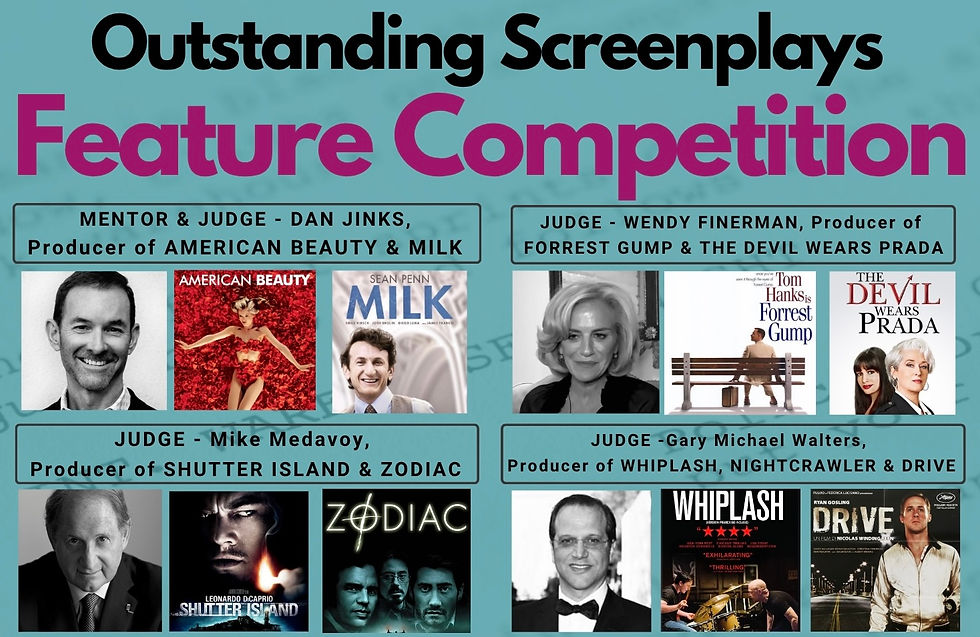
Judges for the Outstanding Screenplays Feature Competition include:
Dan Jinks - Oscar Winner for American Beauty
Wendy Finerman - Oscar Winner for Forrest Gump
Adam Novak - Head of Story Development for Literary Agency WME
Gary Michael Walters - Producer of Drive, Nightcrawler, and Whiplash
Mike Medavoy - Producer of Shutter Island, Zodiac and Black Swan
Writers will receive an EXCLUSIVE one-page written
feedback report from these judges!
Grand Prize Winner(s):
* $5,000 Guaranteed Option for the Overall Winner!
This is your real chance at getting your script made into a feature film!
MENTORSHIP with Academy Award® Winner DAN JINKS (Producer of American Beauty)
6 x $500 in Cash to each of our 6 GENRE Prize Winners.
Best Action & Adventure - $500 for the Winner
Best Comedy - $500 for the Winner
Best Drama - $500 for the Winner
Best Horror - $500 for the Winner
Best Sci-Fi & Fantasy - $500 for the Winner
Best True Story & Public Domain - $500 for the Winner


Comments