


From First Draft to a 10-Minute Monologue: Screenwriting Lessons from Digger

The typical scene in a movie will run anywhere between 1.5 and 3 minutes.
One of the highlights of Digger, a feature starring Tom Cruise and directed by multiple Academy Award winner Alejandro G. Iñárritu, is the 10-minute monologue performed by Digger (Cruise) in front of a room of angry Norwegian politicians.
Ten minutes is a long time for a character to talk without much interruption in a movie, an
accomplishment for any actor memorizing approximately 1,000 words, especially when it’s to be performed in one long continuous take. Comparably, Cruise’s iconic opening monologue as Frank T.J. Mackey in Magnolia is about 5 minutes.
What makes it impressive from a screenwriting perspective is that the scene reportedly went through nearly 70 versions during the film’s decade-long development.
This begs the question: How do you write ten minutes of dialogue that doesn’t feel like ten minutes of dialogue?
Easy: write great dialogue.

Okay, it’s not that easy because a monologue isn’t just about the words coming from the actor’s mouth. A monologue must function like a scene where there’s conflict, escalation, resolution and emotional stakes. The scene must reveal something about the character or plot and the dialogue can’t be just exposition.
The monologue from Digger wasn’t in the first draft of the screenplay or even part of the initial concept, but rather it emerged from Iñárritu’s collaboration with Cruise and some of the other writers of the movie.
This blog will focus on what screenwriters can learn from how Digger came to be, how Iñárritu got Cruise on board and what’s needed when writing a 10-minute monologue.
A Monologue is Part of a Scene
Digger doesn’t stroll into the room and deliver a 10-minute monologue to his awaiting audience. There is a build up to this moment, which is a culmination of the scenes before it and how things move forward after it.
The monologue is not a speech
The first thing to ask is why the character has to say what they’re saying in front of who they’re saying it.
Digger’s speech wouldn’t work at Christmas dinner or in a courtroom but it must come after Ganesh’s (Riz Ahmed) speech addressing the same hostile audience. What does Ganesh say that impacts what Digger is about the share?
Once he starts the monologue, it can’t be just a speech, but rather a progression where the character is hitting varying emotional levels with stakes rising as they reveal more and more information or changing their approach based on their audience’s reaction.
As a screenwriter, after watching Digger, consider how the momentum of Digger’s monologue would shift if this audience reacted differently. How would that alter the scene?
Using reversals to keep the audience on their toes
Another way to keep the scene and monologue engaging is using reversals, so just when the viewer thinks the speech (or scene) is going one way, you change direction. A joke can become serious or a confident orator can become vulnerable. For example, in A Time to Kill, Matthew McConaughey plays a lawyer who has one last shot to convince a jury of his client’s innocence. He tells a heart-wrenching story that, by its conclusion, there’s not a dry eye in the house. Then his last sentence is a reversal no one sees coming to close his argument.
Silence can be loud
A long pause at the right moment can be just as meaningful of a great line of dialogue. Perhaps the character is searching for the right words, waiting for a reaction or realizing something. Maybe they made a point that needs a moment to stick.
Motion Creates Energy
Digger doesn’t stand at a podium and deliver his monologue. He’s moving. A lot. In fact, the 10 minutes act as a choreographed dance, metaphorically. Cruise and Iñárritu use the full space of the room to ensure the power of the monologue remains intact.
“Look at that scene, that dance. What he does with the camera, which Chivo (cinematographer Emmanuel “Chivo” Lubezki) and I developed together with him over many months,” Iñárritu said in a TimeOut interview. “But the way he does it to make it natural and to master the words, the eye, that little eye movement…all that mastery.”
What starts as dialogue on a page, must eventually become something much more visual. Make you character:
Touch something
Change positions
Approach someone
Back away
Stop moving suddenly
Look directly at an individual
70 Versions of the Scene!
“We had maybe 70 different versions of the monologue as we wrote the script over nine years, because it was always the heart, the spine, and the mirror of the film. There are so many ways of expressing it, and so many lateral ideas connected to the same discussion about what we want reality to be and what it is,” Iñárritu said in a Mid-Day interview.
Okay, not every scene you write needs dozens of rewrites but the lesson screenwriters can takeaway here is that your first pass on your script isn’t going to be perfect or the one that ultimately gets shot.
Screenplays don’t arrive fully formed and, because filmmaking is a collaborative medium, it will go through new iterations as actors, producers and those you rely on for feedback give notes. You may change an earlier scene that impacts another or uncover a better joke, then once the script is read aloud you discover an even better one.
Writing is rewriting; that’s why many professional writers believe in the “vomit” draft. Your first draft doesn’t need to be good, but if you can get it all out on the page then you have something to rewrite.
With a scene as complex as Digger’s monologue, with as much movement and interaction he has with the Norwegian politicians, it’s no wonder that the scene went through so many versions, which may have included:
A line not landing well
A paragraph that needed to be broken up by a pause
A new reaction, followed by new words
A movement that, through rehearsals works better cinematically
An idea that works better earlier or later in the scene
If the idea of the scene is critical to the story, it must be finessed to work in the film. Considering the monologue is the heart and spine of the story, it shows why so much attention was devoted to getting it right.
Remember, a revision isn’t a sign that something has gone wrong, but a means of discovery.
Turning an Idea into a Screenplay
Writers can come up with countless ideas. Most will never come to fruition. Others may spark a little inspiration. And then a few will turn into a full-fledged story.
Usually, the ones that stand the test of time and get turned into screenplays are the ones writers can’t seem to shake. It’s an idea or a concept that gnaws at us until we realize we have to tell this story.
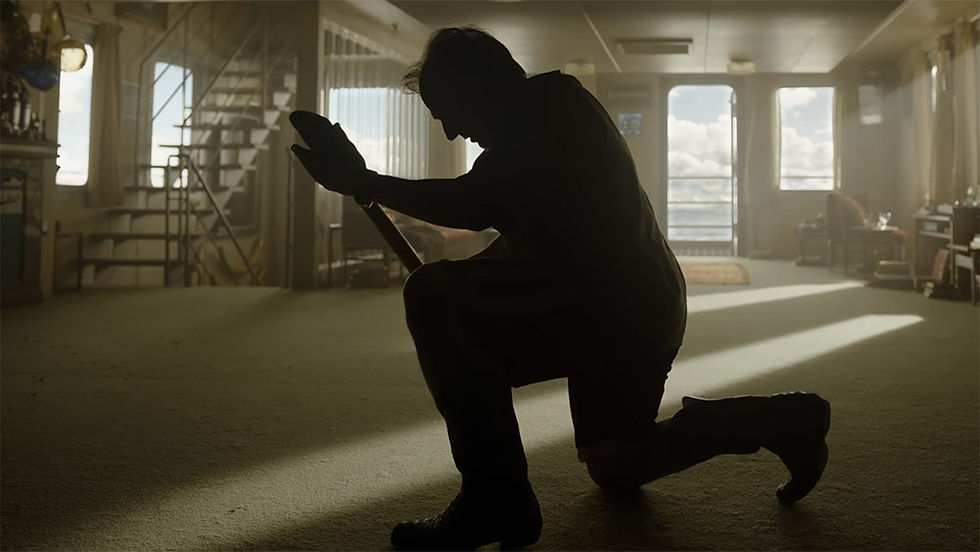
Iñárritu’s idea for Digger began over 10 years ago after he finished The Revenant. He called it an obsession. Iñárritu, along with co-writer Sabina Berman, began writing the screenplay in 2017 and, as mentioned previously, have been through multiple rewrites.
As the ideas become words in a screenplay document, Iñárritu and Berman consulted scientists, traveled to the Arctic and Antarctic and researched the story. As politics evolved through this time, they kept reimaging it and rewriting the story to ensure it remained a satire.
This was more than just polishing dialogue or editing scenes, they were figuring out what they envisioned the movie to be.
Through a decade of writing and eventually getting the story to the screen, Iñárritu never lost his North Star – that obsession about an eccentric, powerful billionaire.
“I knew how he spoke, how he survived, how he seduced reality into agreeing with him,” said in a Variety interview. He knew it from the very beginning.
What screenwriters can learn about his process is not to confuse changing your screenplay with losing your vision. In fact, rewriting is a means of helping you get closer to that vision.
Why Would an Actor Want to Be in Your Movie?
It didn’t hurt that Cruise had been a fan of Iñárritu since his breakout feature Amores Perros back in 2000. So, when Iñárritu had a screenplay he was happy with, he approached Cruise for the lead role.
But he didn’t just send him a script and hope Cruise would get around to reading it. He spent several days reading the screenplay aloud to Cruise – and that’s standard for the actor.
“What I do with directors and writers is I don’t read the scripts,” Cruise said in a New Heights interview. “I have them read it to me. I have them read it to me because I don’t want my ideas to invade it yet. I want to understand what is their communication. They’ve been working on it and they have things that are just there.”
While not every actor will make a filmmaker do this, the underlying message is that actors don’t just sign on to a movie because of the script, but the vision of the writer and director. Think of it like this: how many actors would say yes to acting in a random film about The Odyssey versus how many would say yes because they believe in Christopher Nolan’s vision for The Odyssey?
For Digger, Cruise was intrigued by the character and the story.

“I had never read a character like this, let alone had the privilege of playing someone like him on screen,” Cruise said in a TimeOut interview. He began finding the character through his voice, rhythm, movement, physicality and attitude.
Actors want more than great dialogue; they want to play something challenging. A 10-minute monologue is tough enough and definitely a great scene for awards consideration, but the overall character from beginning to end is what matters most
Writers don’t need to sit down and wonder if the character in the screenplay they’re writing is going to win the actor an Oscar, but whether it will give an actor the opportunity to deliver a memorable performance.
Conclusion: What’s Your Point-of-View?
What started as an idea that became an obsession also began with a perspective. Iñárritu wanted to share a point-of-view with the world and used it to build a political satire where eccentric billionaires and politicians control the world. It all culminates into a crowning achievement of Digger.
“I’m not interested in pointing fingers or reducing the film to a political commentary or a right or left thing,” Iñárritu said in an IndieWire interview. “I’m trying, through Digger’s speech, to say that we are all part of this madness. That there are no good people or bad people. The system has trapped all of us, and we have to find a way out together.”
Use your voice to share your point-of-view and use your screenplay as a vehicle to bring talent onboard to help you tell it.
World's best Producers are looking for Feature Screenplays to Produce
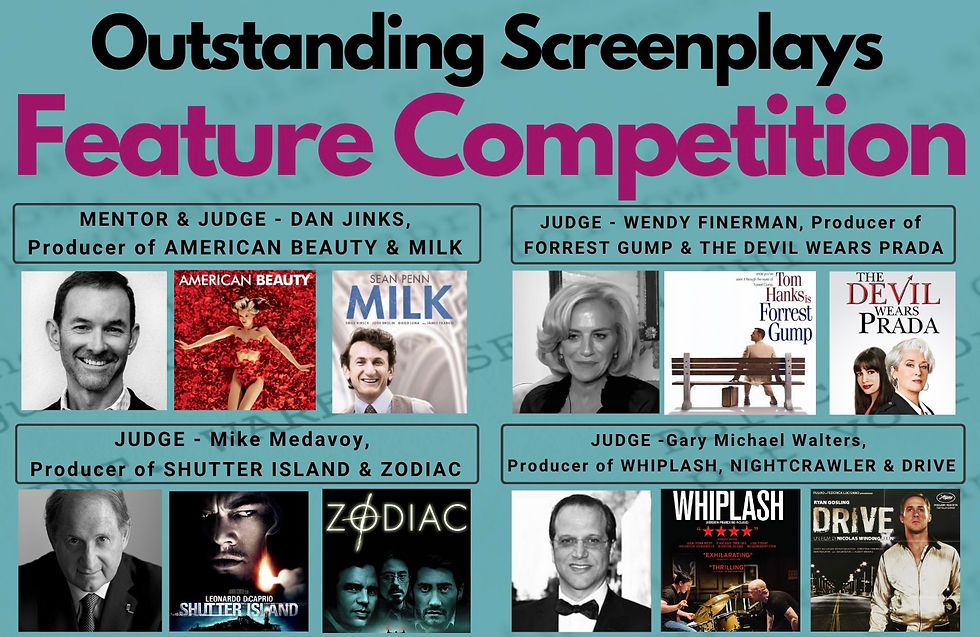
Judges for the Outstanding Screenplays Feature Competition include:
Dan Jinks - Oscar Winner for American Beauty
Wendy Finerman - Oscar Winner for Forrest Gump
Adam Novak - Head of Story Development for Literary Agency WME
Gary Michael Walters - Producer of Drive, Nightcrawler, and Whiplash
Mike Medavoy - Producer of Shutter Island, Zodiac and Black Swan
Writers will receive an EXCLUSIVE one-page written
feedback report from these judges!
Grand Prize Winner(s):
* $5,000 Guaranteed Option for the Overall Winner!
This is your real chance at getting your script made into a feature film!
MENTORSHIP with Academy Award® Winner DAN JINKS (Producer of American Beauty)
6 x $500 in Cash to each of our 6 GENRE Prize Winners.
Best Action & Adventure - $500 for the Winner
Best Comedy - $500 for the Winner
Best Drama - $500 for the Winner
Best Horror - $500 for the Winner
Best Sci-Fi & Fantasy - $500 for the Winner
Best True Story & Public Domain - $500 for the Winner


Comments