


How I Play Rocky Shows Screenwriters How to Write True Stories and Find Their Voice

Everybody knows Rocky. Even people who have never seen the 1976 boxing film may be familiar with the story of how Sylvester Stallone refused to sell his screenplay for a big payday unless he played the title character. Stallone considered himself an actor first, and so he gambled on himself. It’s been paying dividends for decades.
I Play Rocky is more than a melodrama about a struggling actor and stubborn screenwriter. It dives deeper into Stallone’s life in the 1970s when the movie industry didn’t seem interested in him, why he even got into screenwriting and the enormous amount of faith he put in himself when almost nobody else would.
For screenwriters, there’s a lot to take away from how his journey unfolds over 2 hours of screen time. I Play Rocky shows screenwriters how to bring real-life stories and events to the screen, how to ground well-known people in empathetic characters and what it means to have a distinctive writer’s voice.
How to Ground a Famous Character
Sylvester Stallone is famous. People know his face, his voice, his movies and his latest hit show, Tulsa King.
I Play Rocky takes audiences back to a time when none of this existed. How do you make audiences forget they’re watching a portrayal of a famous movie star? How do you ground them and make them relatable?
Grounding Stallone (Anthony Ippolito) starts in the first scene of the movie when he stands in the dark auditioning for a role for ‘Thug #2’. He gives his best reading but hears chuckles in the background, likely due to his prominent lisp. That’s not all, subsequent scenes involve:
Stallone returning to his rundown pay-by-the-night lodgings where the landlord insists he pays
what’s due
Using the name “Mike Stallone” because his lisp makes it hard for him to say “Sylvester”
Reading poetry in a recorder to work on his speech impediment
Sleeping on the streets
Auditioning for a bit part in a softcore porn film, and getting it
The story is no longer about the iconic actor, but an underdog trying to catch a break. Even if you’ve never been that down-and-out, people can relate to trying and failing, the fear of being laughed at in front of others and working to improve themselves. For screenwriters writing true stories, it’s important to look beyond the public image and find the personal details that humanize a character and make them vulnerable.
Staying True to the Story, Not Necessarily the Facts
How much of a true story needs to be true?
It’s impossible to remain completely faithful to the facts when writing a movie based on real events and characters. A feature film isn’t a documentary, and condensing a portion of someone’s life into two hours means making choices about what to include, leave out and embellish. What’s important is to find the balance that allows the movie to stay true to the story more than the specifics.
“In some ways, even though it is a real person, you have to be willing to take certain liberties, even in the story,” Ippolito mentioned in Awards Watch.
Historical accuracy and emotional truth aren’t always the same thing. Screenwriters might have to compress timelines, combine events, create scenes that convey something about a person’s character and definitely make up dialogue. It’s not about creating a different person, but turning that person into a movie character and dramatizing the truth of their experience.
Taking creative liberties means serving story, not distorting it.
“I spent a lot of time thinking about whether I was doing it justice. Am I being truthful? Am I capturing the spirit?,” writer Peter Gamble shares in an interview with Philadelphia Magazine. “You’ve got to make some changes when you tell a story because you’re condensing a life into two hours. I spent a lot of time thinking ‘Is Stallone going to see this someday and say they did honor and justice to my story?’”
Writing the Story Behind Something Big
Some of the most interesting movie ideas aren’t about the big event, but the people and circumstances behind it. Audiences know the Titanic sinks, D-Day was a pivotal moment in World War II, Tetris was invented, Jackie Robinson broke the color barrier in Major League Baseball and Rocky was a movie.
What they don’t know are the personalities, conflicts, setbacks and decisions that made it happen.
I Play Rocky is an intriguing story because it shows what Stallone went through to make it an eventual success, which many people don’t know the intimate details of the story.
Audiences embrace movies based around big events and Hollywood consistently explores the backstory of history. Consider these examples:
Sports Movies
42 follows the events surrounding Jackie Robinson being the first Black man to play in the Major Leagues
Cool Runnings looks at how a Jamaican bobsled team made it to the Olympics
I, Tonya takes audiences behind the scenes of what really happened between ice skaters Nancy Kerrigan and Tonya Harding
Moneyball explains how an analyst and general manager of the Oakland A’s literally changed the game of baseball
Pop Culture
The Social Network dramatized the rise of Facebook and the people who invented and fought over the platform
Straight Outta Compton was the true story behind the rise of N.W.A. and how they fought back against those who opposed them
Saturday Night was a story of the 90 minutes leading to the first episode of Saturday Night Live and how it almost never came to be
Michael showed the beginning of Michael Jackson’s career, including his family life and how he took control of his career
History Changing Events
Pressure focuses on how a meteorologist’s interpretation of the weather affected the D-Day landings
Zero Dark Thirty was a dramatic thriller about those tracking bin Laden leading to his capture
Selma told the behind-the-scenes story of Martin Luther King’s quest for equal voting rights and his march from Selma to Montgomery
Titanic wasn’t about the ship’s fateful voyage, but Jack and Rose
These films, like I Play Rocky, didn’t retell the story but highlighted the people around those events. There’s a natural curiosity to know what happened behind the scenes, especially when audiences come into the story with some context.
For screenwriters, the opportunities in writing stories behind well-known events come from the humans within it, whether it’s a small group of smart, dedicated people explaining why D-Day needs to be held off or one person’s refusal to compromise their dream of becoming a leading actor.
If you find a story or event worth telling but aren’t sure where to start. Ask yourself these questions:
Who were, or could be, the people behind this event?
What did they stand to gain or lose?
What obstacles got in their way?
Who was with them or against them?
What don’t audiences know about the event?
The Importance of a Distinctive Writing Voice
Every storyteller has a unique voice. Sometimes they struggle to find it or it takes time to develop, which is normal. Having your own voice though helps you stand out when people read your screenplay.
Finding your voice involves bringing your own experiences, perspective and personality to the page. Think about why you like certain authors while others might be more difficult to enjoy. Screenwriters like Aaron Sorkin, Quentin Tarantino and David Koepp bring their own expertise of the craft to their stories and you can often identify their stories by their “voice.”
Stallone didn’t write a movie about an underdog boxer. He saw something of himself in the character and used that to tell the story. Both Rocky Balboa and Sylvester Stallone were underestimated in their field, struggled to get their break and had something to prove. Stallone’s personal connection to Rocky gave the screenplay authenticity and was why he felt he was the only one to play the role.
Screenwriters should try to write screenplays the way they tell stories or like hearing them.
Write What You Want
In one scene from I Play Rocky, producers Irwin Winkler (P.J. Byrne) and Robert Chartoff (Toby Kebbell) inform Stallone that boxing movies are dead. They don’t make any money and studios aren’t interested. Stallone’s instant rebuttal is that mob movies were dead too until The Godfather.
Hollywood often declares genres dead. At one point, Westerns had fallen out of favor. And then, in the 1990s, films like Tombstone, Wyatt Earp, Unforgiven and Dances with Wolves found large audiences and won Academy Awards.
Boxing movies were dead, but Stallone had an idea for a boxing story that resonated with audiences and won Best Picture at the Academy Awards. Soon after, they made a resurgence with several Rocky sequels and Raging Bull, which also received several Oscar nominations and wins.
Screenwriters shouldn’t chase trends or abandon stories because they think the genre is out of fashion. Write the movie you want to see, even if the industry isn’t asking for it.
Perhaps one of the strongest lessons from I Play Rocky is believing in yourself. Stallone wrote a screenplay because he wanted to create roles he could play. When offered hundreds-of-thousands of dollars to sell the script and forget acting, he refused.
“You’ve got to believe that they’re wrong and you’re right,” director Peter Farrelly said in a Deadline interview. “You know, year after year getting turned down, it’s hard. You just gotta stick out and hope that you’re right.”
World's best Producers are looking for Feature Screenplays to Produce
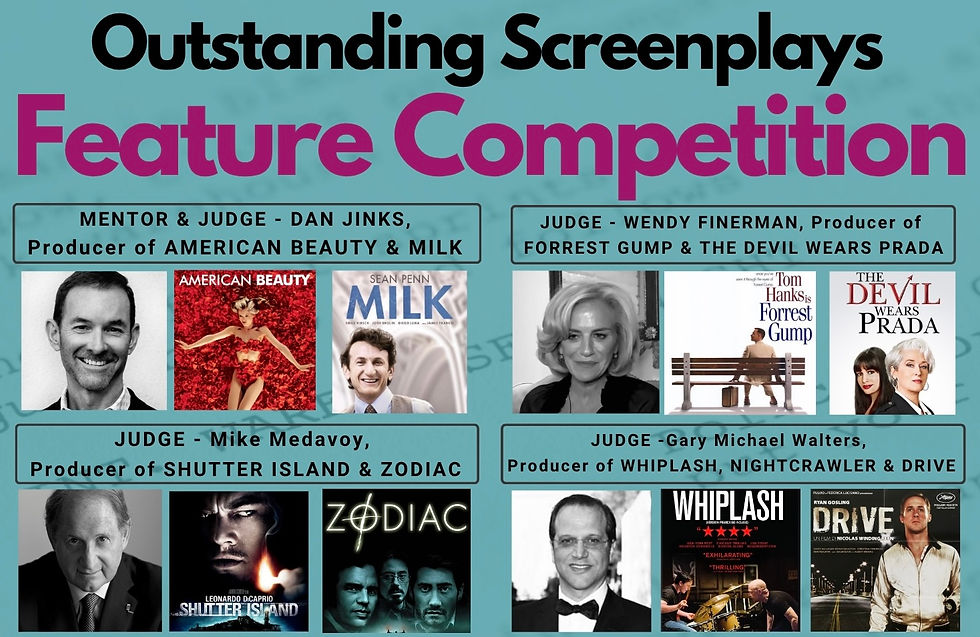
Judges for the Outstanding Screenplays Feature Competition include:
Dan Jinks - Oscar Winner for American Beauty
Wendy Finerman - Oscar Winner for Forrest Gump
Adam Novak - Head of Story Development for Literary Agency WME
Gary Michael Walters - Producer of Drive, Nightcrawler, and Whiplash
Mike Medavoy - Producer of Shutter Island, Zodiac and Black Swan
Writers will receive an EXCLUSIVE one-page written
feedback report from these judges!
Grand Prize Winner(s):
* $5,000 Guaranteed Option for the Overall Winner!
This is your real chance at getting your script made into a feature film!
MENTORSHIP with Academy Award® Winner DAN JINKS (Producer of American Beauty)
6 x $500 in Cash to each of our 6 GENRE Prize Winners.
Best Action & Adventure - $500 for the Winner
Best Comedy - $500 for the Winner
Best Drama - $500 for the Winner
Best Horror - $500 for the Winner
Best Sci-Fi & Fantasy - $500 for the Winner
Best True Story & Public Domain - $500 for the Winner


Comments