


A Man, A Dog and Little Dialogue: What Screenwriters Can Learn from ’Heart of the Beast’

Updated: Sep 28
A lone survival movie is unlike any other type of genre. It often has no elaborate villain but rather the protagonist must fight against the environment that find themselves in or something threatening that has no face and no agenda. They’re often “man vs. nature” or “man vs himself.”

Heart of the Beast follows that same model as James (Brad Pitt), a former Army Special Forces soldier, and Odin, his military dog, find themselves stuck in the rugged Alaskan wilderness with the only means of escape is using the survival skills they’ve acquired.
It’s one thing to challenge your protagonist and his loyal companion to survive nature’s harsh elements, it’s another to make it into a compelling story the audience wants to keep watching. Accomplishing this involves creating a character that moviegoers want to follow and then keep finding new ways for the environment to make survival harder.
From writing a survival story to creating a complex character, here are 6 lessons from Heart of the Beast screenwriters can use to help write their next screenplay.
1. Don’t Rush the Setup
Slow doesn’t necessarily mean boring. The first 20-25 minutes of Heart of the Beast provide little action but instead establishes the bond between James and Odin as well who they are as characters.
During this time, the audience observes James as he flies a plane to a remote destination and gets to work setting up his camp. Throughout this time, the moviegoer sees:
Who James is
What he can do
Elements of his military background
His personality
His distrust of other people
Some physical limitations
The environment he’s in
There is little dialogue but plenty of “action” as James begins to reveal his survival skills: you’re not going to camp in a mountainous region 50+ miles from any hints of civilization without being well-versed in basic survival skills and the ability to solve complex problems by yourself.
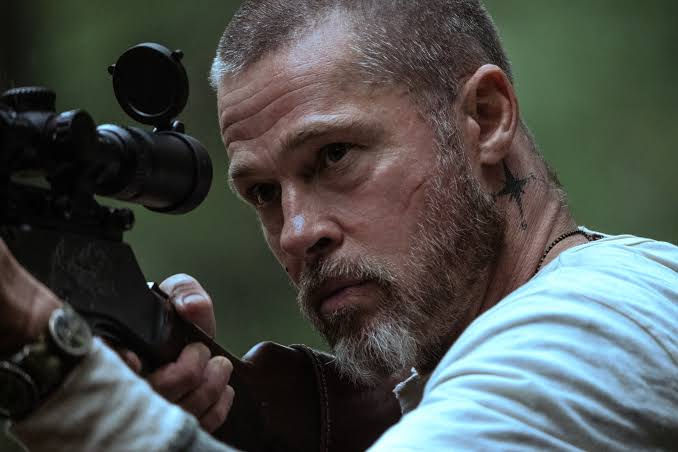
James is a complete loner, which makes his confrontation with another human (one of the three human characters in the film) fascinating. When Watkins (J.K. Simmons) comes across James, he seems friendly, chatty and eager for conversation. James is not – he won’t even shake the man’s hand. The little opening up he does reveals more about why he prefers to be alone rather than with others. It’s all part of setting up who James is as a character.
Watkins is not there for nefarious reasons, just a passerby. It helps reveal a bit of James’s past and hints at his desire to remain alone in the world, with the exception of Odin.
The first act of Heart of the Beast is a great way for screenwriters to see how to introduce a character through action, not words.
2. Highly Capable Characters Need to be Vulnerable
The masculine hero sashays into town ready to prove their capabilities to any challengers and fight anyone that gets in their way – this masculine archetype simply doesn’t cut it anymore – if it ever did.
So, when the highly-trained ex-soldier finds himself in trouble, on paper he sounds perfectly equipped for anything a wilderness disaster throws his way. But he’s not. And if James didn’t have vulnerabilities, it would soon become a storytelling problem.
Where’s the suspense if they can solve everything with ease?
Heart of the Beast gives James some weaknesses that directly conflict with the problem he’s about to find himself in.
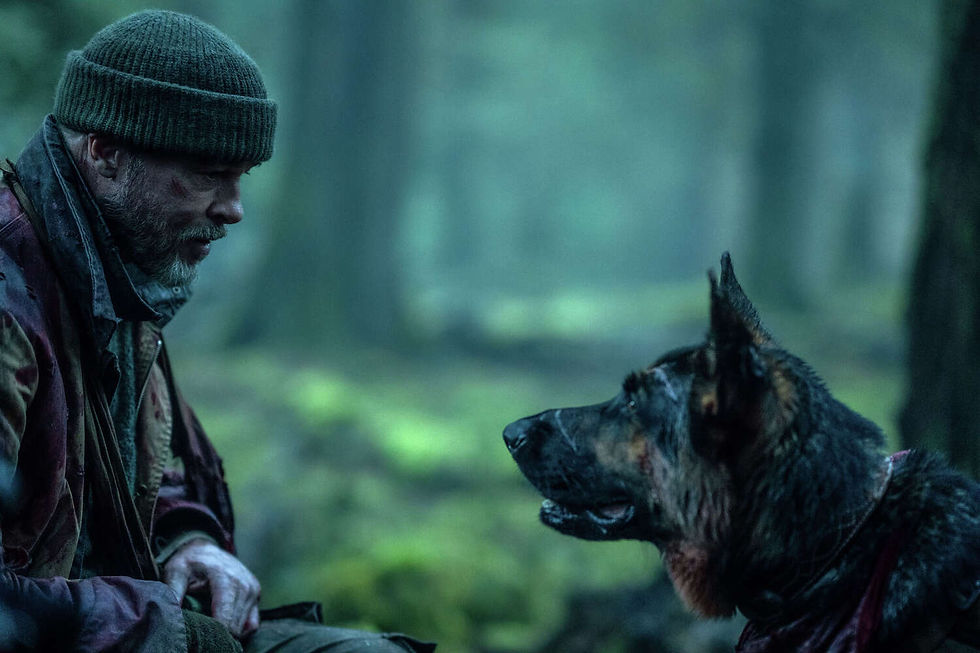
The plane crash doesn’t happen because of mechanical failure or anything like that, it occurs when James has a heart attack mid-flight. He and Odin both survive the crash but now James is weaker with his heart trouble. He’s older and, while Brad Pitt has the body of a 20-something athlete, his character would’ve suffered injuries, pains and bruises while at war as well as have the signs of aging.
There’s the contradiction: James knows how to survive. His body isn’t always capable of doing it.
Carrying supplies, climbing, crossing rivers, dealing with weather and helping Odin through his limitations takes its toll physically, mentally and emotionally. It’s hard enough for anyone but especially challenging for a man in his 50s.
When developing the protagonist, it’s critical to give them vulnerabilities that will directly impact how they solve the obstacles that get in their way.
3. Writing an Animal as a Real Character
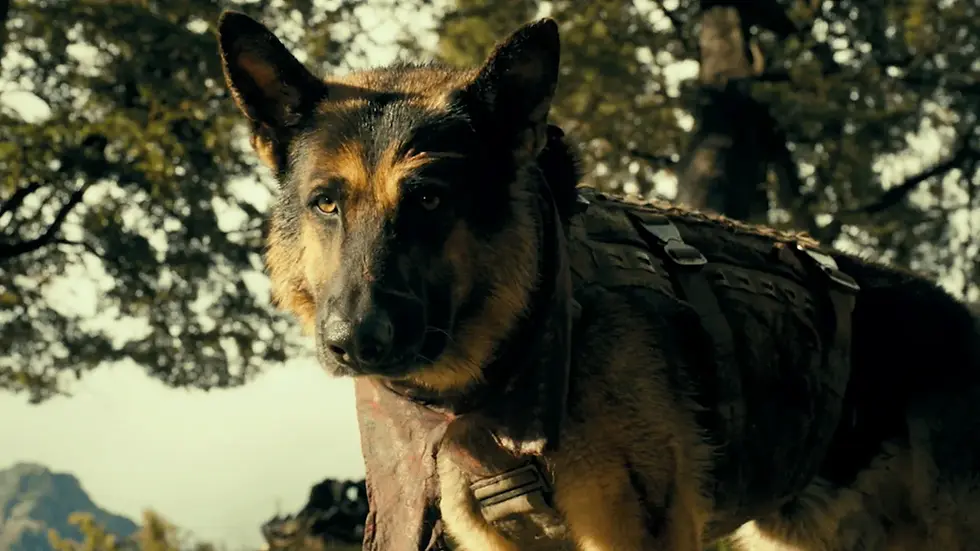
Odin is a major character in Heart of the Beast, so much so that Pitt has even confessed he considers himself a support character to the dog.
The film opens with a woman driving down a desolate road and see Odin standing there, alone. Then text that reads, “1 Week Earlier.”
This is important information on a few levels. For one, the audience knows the dog survives the story, which allows them to relax a little bit – massacre a whole army of people and the audience is okay with it, injure an animal and a lot of people can’t get past it.
Odin’s presence at the start of the movie impacts how moviegoers experience the story. His survival and James’ fate (whatever it may be) are intertwined. The story isn’t just James making it out, but Odin too, and how they both work toward that success.
An animal can be a character without ever speaking. The key is giving it distinct behaviors, needs and reactions that reveal its personality and deepen its relationship with the human protagonist.
Odin is a complex character. He suffers from PTSD, as revealed early in the movie when he has a nightmare and James comforts him and doesn’t leave James’s side, whether they’re fishing, hunting or hanging out.
Importantly though, Odin isn’t simply there to make James’s journey more difficult. He has fears, exhaustion, loyalty and instincts like any human character might; there’s just no dialogue. When Odin…
Lifts his head up quickly, he might be sensing trouble
Puts a paw on James’s back, it shows comfort and support
Backs away, it shows fear
Screenwriters must treat an animal as an essential part of the story rather than simply a companion or an obstacle and should be developed like any other character in the story.
4. How to Write a Screenplay with Little Dialogue
Writing a movie or a scene with little dialogue forces a screenwriter to ask, what is actually happening?
Without dialogue that explains the characters, their feelings or the situation, the story must be told through actions and what the characters do. This is the storytelling technique used in Heart of the Beast where James and Odin react and respond to what’s in front of them without saying anything.
James doesn’t explain how he’s setting up a tent, starting a fire or preparing his plane for take-off, he does it.
“…without all the dialogue kind of telling us what’s going on, or to entertain the audience that way, it really becomes about the visual and the image and what the frame is doing, what the camera’s doing, what the actor’s doing, and placing them in this world in such a believable way,” Ayer said in a Record Online interview.
We’ve all seen the movies where dialogue is added when it’s not needed – someone who’s alone makes coffee in the morning and says, “I’m tired, I need some coffee.” Another time, someone provides exposition that feels forced, like when they see someone and say, “Well, if it isn’t my old friend from high school. I haven’t seen you in 5 years since we were at that party together.”
Heart of the Beast demonstrates how images, actions, reactions and movement carry a story rather than dialogue. Characters don’t always have to talk about what they’re going to do, but rather take action that reveals who they are.
Screenwriters also must make use of the page and write visually. This is particularly challenging because screenwriters must write for a visual medium with words that evoke feeling.
People can visualize a line like, “They stand, exhausted.” But they feel, “With labored breath and heavy eyelids, his legs wobble as he struggles to rise.”
Everything from a look, a gesture, a change in behavior or a physical choice can communicate information better than an entire conversation might.
5. Man vs. Nature
There are no villains in Heart of the Beast. The film is centered on the concept of man versus nature with the antagonist being the Alaskan wilderness. It’s the location that presents new problems whether it’s a massive bear, a pack of wolves or a raging river.
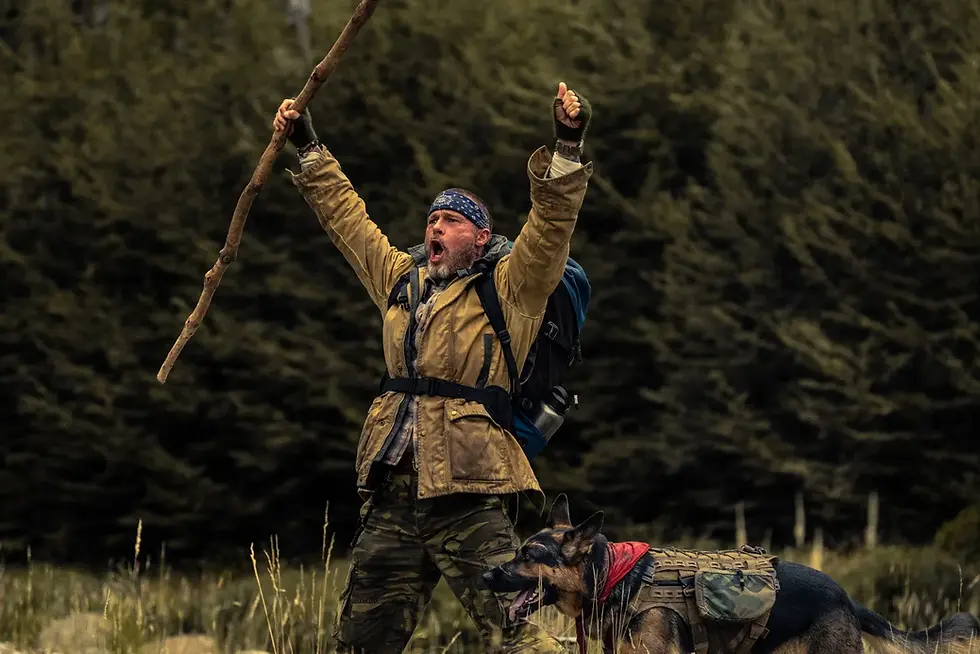
In movies like Castaway, Society of the Snow, Into the Wild or 127 Hours, the threats come from nature and not an antagonist pursuing their own goals. Man vs. Nature can include:
Wild animals
Weather events like snow or thunderstorms
Limited food/water
Raging rivers
Rugged terrain
Physical exhaustion
In Heart of the Beast, James doesn’t face random obstacles. Each challenge is a new obstacle he and Odin must face and defeat as they get closer to their goal.
Not only is the environment something to consider in a survival story, but one in any story you’re interested in telling. Screenwriters can use these environmental elements to expand any story and challenge the protagonist.
6. Writing to Get an A-List Actor
Actors choose roles for a variety of reasons. Sometimes they want to star in a huge summer blockbuster while others might aim for the indie project despite the giant pay cut. Regardless, actors like to be challenged. Why else would Leonardo DiCaprio freeze his butt off to make The Revenant or Tom Hanks gain 55 pounds then lose it for his role in Castaway?
From directors to roles to stories that speak to them, there isn’t a single reason a star decides to choose their next role. Even Samuel L. Jackson chose Snakes on a Plane because the title sounded like it would be a fun, campy, escapism-type movie.
Overall, it comes down to trust. Actors must trust the story and the people around them to make it a success. For Pitt, this came to the material.
“I just silently wept. It just really, really moved me,” Pitt said in a Toronto Sun interview. “I read it again and had the same reaction. And I just said, ‘Well, I’m not sure what it is, but there’s something in here worth doing, investigating, supporting, so let’s go.’ I called up my old friend David Ayer and off we went.”
Pitt had found something in the story that immediately got him emotionally invested in it.
“I put Cameron’s script down at the end, and I started to get a little choked up,” Pitt admitted in an Entertainment Weekly interview. “I disappeared out the back [of the house] so no one could see me on the porch there. And I just had a little silent weep. I just figured, if this thing has touched me in this way, it’s worth investigating and seeing if we could bring that to the film.”
You can’t write a screenplay that guarantees an A-lister will sign on. But you can write a role that gives an actor something they can’t resist exploring. Rarely will a star gravitate toward something generic – write something unique that allows them to show their talent and have some good lines or moments, and you’re closer to landing an A-lister.
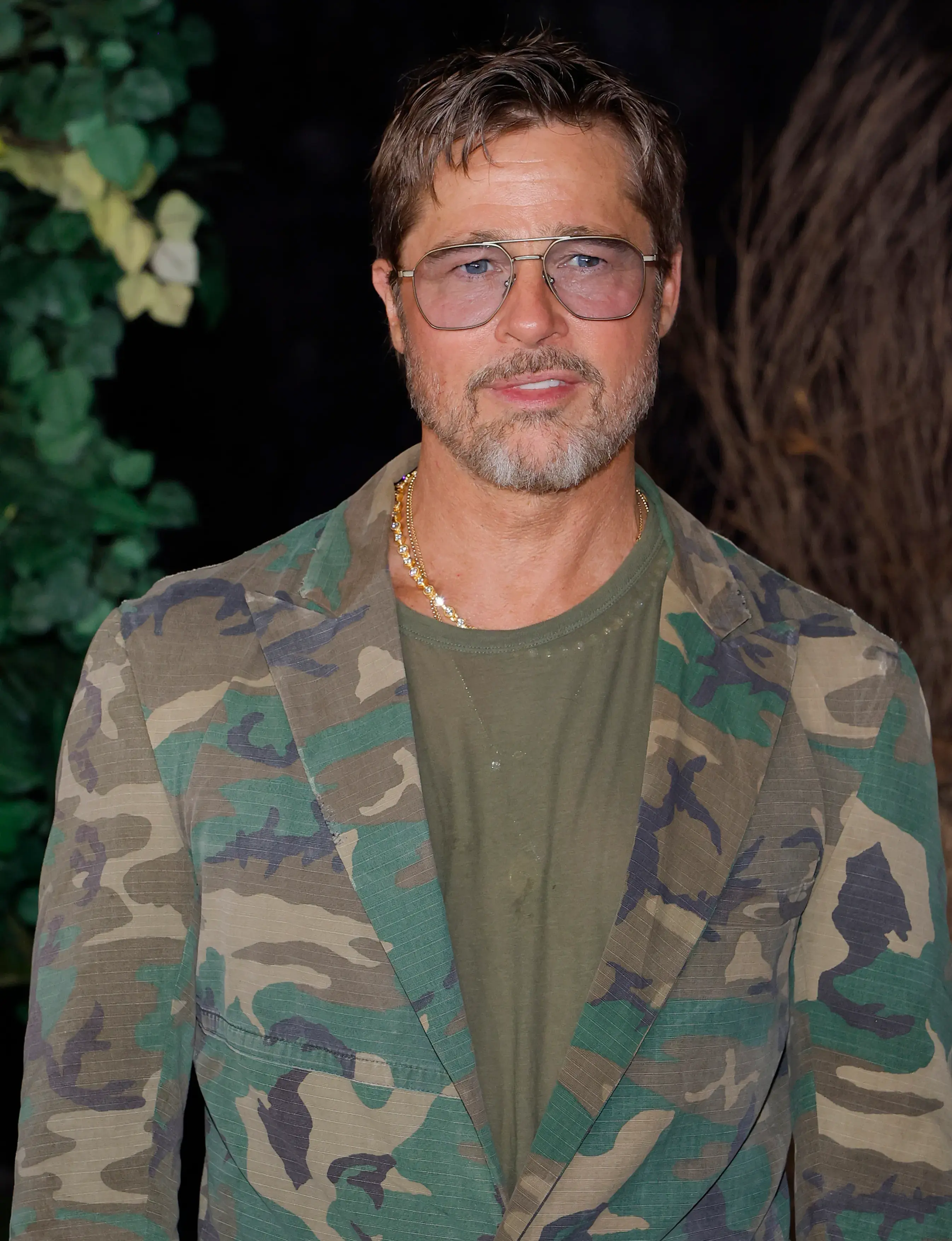
Heart of the Beast may be a survival story, but there are several lessons screenwriters can use in their stories whether they take place in the Alaskan wilderness or suburban neighborhood.
World's best Producers are looking for Feature Screenplays to Produce - DEADLINE is SEPTEMBER 30th!

Judges for the Outstanding Screenplays Feature Competition include:
Dan Jinks - Oscar Winner for American Beauty
Wendy Finerman - Oscar Winner for Forrest Gump
Adam Novak - Head of Story Development for Literary Agency WME
Gary Michael Walters - Producer of Drive, Nightcrawler, and Whiplash
Mike Medavoy - Producer of Shutter Island, Zodiac and Black Swan
Writers will receive an EXCLUSIVE one-page written
feedback report from these judges!
Grand Prize Winner(s):
* $5,000 Guaranteed Option for the Overall Winner!
This is your real chance at getting your script made into a feature film!
MENTORSHIP with Academy Award® Winner DAN JINKS (Producer of American Beauty)
6 x $500 in Cash to each of our 6 GENRE Prize Winners.
Best Action & Adventure - $500 for the Winner
Best Comedy - $500 for the Winner
Best Drama - $500 for the Winner
Best Horror - $500 for the Winner
Best Sci-Fi & Fantasy - $500 for the Winner
Best True Story & Public Domain - $500 for the Winner


Comments