


5 Screenwriting Lessons from Spider-Man: Brand New Day


In Spider-Man: Brand New Day, Spider-Man (Tom Holland) has been busy. He spends his days – and most nights - fighting crime in New York City, trapping bad guys and leaving a trail of destroyed streets, flipped cars, shattered windows and chunks of buildings in his wake. But the police forgive him because he’s helping the NYPD nab the notorious villains that they’re simply not equipped to handle.
Everyone loves Spider-Man.
That’s Spider-Man’s life, not Peter Parker’s.
But something’s missing. In fact, a lot of things are missing. That’s because at the end of Spider-Man: No Way Home he was forced to make a difficult decision to save the world: ask Dr. Strange (Benedict Cumberbatch) to erase his identity from everyone’s memory. This decision caused him to sacrifice his relationship with his best friend, Ned (Jacob Batalon), and girlfriend, MJ (Zendaya), who he now spies on via social media, watching them enjoy college and moving on in life without him.
This being a superhero movie, Peter soon finds himself facing a dangerous new threat while battling internal conflicts around identity, loneliness and overwhelming stress.
Spider-Man: Brand New Day can teach screenwriters a lot when it comes to action, creating character arcs, raising stakes and building a story that fits into a larger cinematic universe. The film demonstrates several storytelling lessons that writers in any genre can apply to their own scripts.
Here are 5 screenwriting lessons from one of the most anticipated films of the year: Spider-Man: Brand New Day.
1. Establish the Hero Today

First thing’s first, whether you’re following the Hero’s Journey or not, you have to establish where the hero of your story is at the moment before the central conflict changes everything. This is their normal life before the adventure begins. For Spider-Man: Brand New Day, this meant spending the first minutes of the movie watching Spidey swing through the city, capturing villains and lamenting on his lost time
with his old friends.
This introduces the movie but also the current emotional state and “normal” life of the protagonist. For Peter, it shows him dealing with the consequences of his decision at the end of the previous film. And while he’s confident when he’s Spider-Man, he’s isolated when he’s Peter. This isn’t just a reminder of where we left off; it’s been almost 5 years, but is a culmination of that time and its impact on Peter.
For screenwriters, this means the reader of your script or the viewer of your movie should understand the protagonist and their world within 10 pages.
2. Every Action Set Piece Advances the Story

In one of the first action set pieces, a massive tank is barreling through the streets of New York. Spider-Man does everything in his power to stop it but it’s determined to make it to its destination.
While smashing cars and web-slinging stunts keep the audience engaged, this scene isn’t just spectacle –it has a specific purpose.
Introduction to Frank (Jon Bernthal). Coming to help Spider-Man is Frank a.k.a. the Punisher, who has an assortment of weapons at his disposal and the ability to use them with deadly precision. Immediately, the audience learns their relationship, Frank’s abilities and temperament, and that Spider-Man prefers to fight his battles alone.
The Department of Damage Control. The tank is headed for the Department of Damage Control. While the audience won’t understand the reason for quite some time in the film, the
question is now presented: Why is this building so important? The mystery adds another layer of curiosity and keeps the audience engaged.
The Tank’s Driver. When the tank is finally stopped and the driver appears, it’s not who anyone expects. And how this ties into the overall story is critical.
As screenwriters will see, the action isn’t there just for thrills, but has a specific purpose in telling the overall film. In fact, if the movie removed the action and simply made it exposition in a newscast, for example, the audience would have all the information they need – it just wouldn’t be as exciting.
Action shouldn’t pause the story; it should be part of the story.
3. Pacing, or Don’t Forget to Breathe
Action scenes are designed to make the audience hold their breath, lean forward and marvel at the spectacle and special effects. However, if you don’t give the moviegoer a chance to breathe afterward, the exciting set pieces begin to lose their impact – it’s kind of like 10 minutes into a fireworks show, most people start to get bored.
Throughout Spider-Man: Brand New Day, there are plenty of thrilling action scenes but these are complemented with quieter character moments. These scenes are designed to help the audience process what just happened while continuing to build the story, deepen relationships or reveal new information.
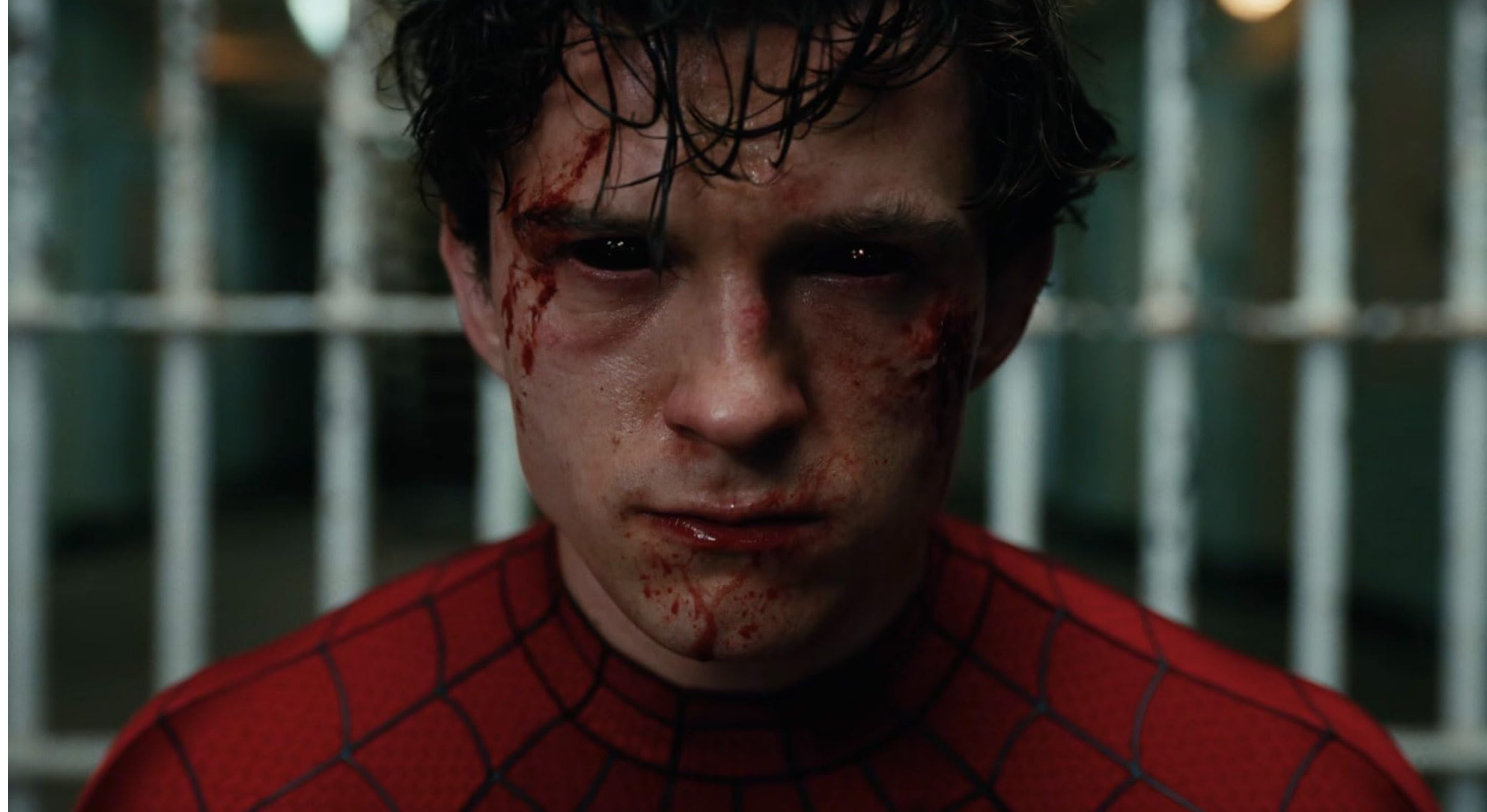
This is a clear distinction between Spider-Man and Peter Parker – Spider-Man being the action, Peter being the character building. By varying the pace, each action sequence feels bigger with more at stake than the last one.
The lesson screenwriters can take away is that the script should move like a roller coaster. While the thrilling drops and loop-de-loops are what the rider remembers, they don’t mean much without the slow climbs that build anticipation.
4. Make Your Villain’s Motivation Believable
Is your villain just an evil punching bag? Or is there actual motivation behind what they are doing?
Remember, the villain is the hero of their story. Throughout Avengers: Infinity War and Avengers: Endgame, Thanos (Josh Brolin) had a specific motivation driving his desire to rid half the galaxy of its population. Even the Predator in the original film wanted to prove its honor and courage.

For Spider-Man: Brand New Day, the antagonist of the film has their specific reason for making the choices they do. They want to be the hero, saving who they believe is in danger and stopping those they believe are causing harm. This character is making choices because it makes sense to them, even if the audience doesn’t agree with them.
A good villain will oppose the hero because their goals don’t align: such as the Joker wanting chaos and Batman wanting order, or the Wet Bandits (Joe Pesci and Daniel Stern) in Home Alone wanting to rob houses and Kevin (Macaulay Culkin) becoming the protector of his home.
Villains should be developed just as much as the hero, which includes seeing how these two will clash, ways that they’re both similar and different and what the defeat of one means to the other.
5. How to Not Lose Your Story When Expanding the World
In the Marvel Cinematic Universe, everything is connected. But how does the latest Spider-Man build connections to past and future films without losing the story? How can they tell a story that stands on its own and connects to the wider universe?
Familiar faces pop up throughout Spider-Man: Brand New Day and by the middle of the film, fans know this film fits in with a broader story. While the characters will help reinforce the larger world, they don’t distract from the movie’s primary conflict – in fact, they’re there to help or hurt it.
Whether it’s a sequel, prequel or television series, world-building should enhance the story. If the filmmakers simply placed characters in the movie because they think fans will enjoy the connection, they’re sorely mistaking. It’s cool at first but soon the audience questions what the point was in the first place.
The filmmakers used familiar characters to bring Peter into a bigger story, even while he’s fighting his own battles in his own film. These references serve a purpose and challenge the protagonist; this doesn’t necessarily mean “fighting,” but includes impacting their thinking and processing of information.
Fan service falls flat if it doesn’t serve the narrative.
Spider-Man: Character First, Spectacle Second
Forget writing a superhero movie…create a screenplay that tells the story of someone whose life is upended and they are forced to make decisions. That’s what Spider-Man: Brand New Day does. If audiences didn’t care about Peter Parker and empathize with the conflicts in his life, they wouldn’t care about Spider-Man.

Forget writing action…unless it moves the story forward. The best chase scenes or battles in cinema mean something because it moves the story and forces the character to make choices.
The lessons from Spider-Man: Brand New Day aren’t designed just for big superhero movies but work with thrillers, dramas and even episodic TV. Look no further than the first Rocky movie.
Introduce the protagonist’s world: a loser boxer who never had a shot
Make action scenes count: Rocky’s (Sylvester Stallone) early boxing matches or training montages are critical to the characters development.
Pacing is important: While Rocky feels slow, it does move between more active scenes with fighting and training sequences with a dramatic story.
Create antagonists with clear motivation: Apollo Creed (Carl Weathers) spent money for a fight and needs an opponent. He’s stronger, smarter, more experienced than Rocky.
Expanding the world: While writer/actor Stallone may not have anticipated several sequels and a spin-off, he built a world that allowed that possibility to flourish.
Remember, in every memorable movie, superhero or not, the screenplay is built more on human moments and less on superpowers


Great breakdown of the screenwriting lessons from Spider-Man: Brand New Day. The focus on storytelling, character development, and structure makes this a useful read for aspiring writers. I also enjoy discovering practical topics beyond writing, including are ziploc bags recyclable, and ways to reduce everyday plastic waste.